
Fundacion UdG /
ProSur
Rain Forest Conservation Fund
The Rain Forest Conservation Fund:
The
Golfito Rain
Forest Conservation
Initiative is a long term effort of the Universidad de
Golfito / ProSur
Foundation to conserve the last remaining unproctected
tropical forest
in Southwestern Costa Rica. Especifically, we
target the AMISTOSA
Corridor, located between the Golfito Wildlife Rufuge
(GWR), the
Piedras Blancas National Park and the upper land forests
in Fila de
Cal. On one hand, The GWR (2,815 ha) does not have
the minimum
size of 4,500 hectares to ensure
the long term survival of most of the endangered species
of flora and
fauna, accourding to experts and, validated by the Costa
Rican Ministry
of the Environment.
Protecting the forest that borders the northern side of
the Refuge
would ensure a large enough gene pool necesary to secure
the survival
of endangered flora and fauna, and would also protect
the AMISTOSA
corridor between
the lower forests in Golfito and the high land forest of
Fila de
Cal. This Conservation Iinitiative also includes
an educational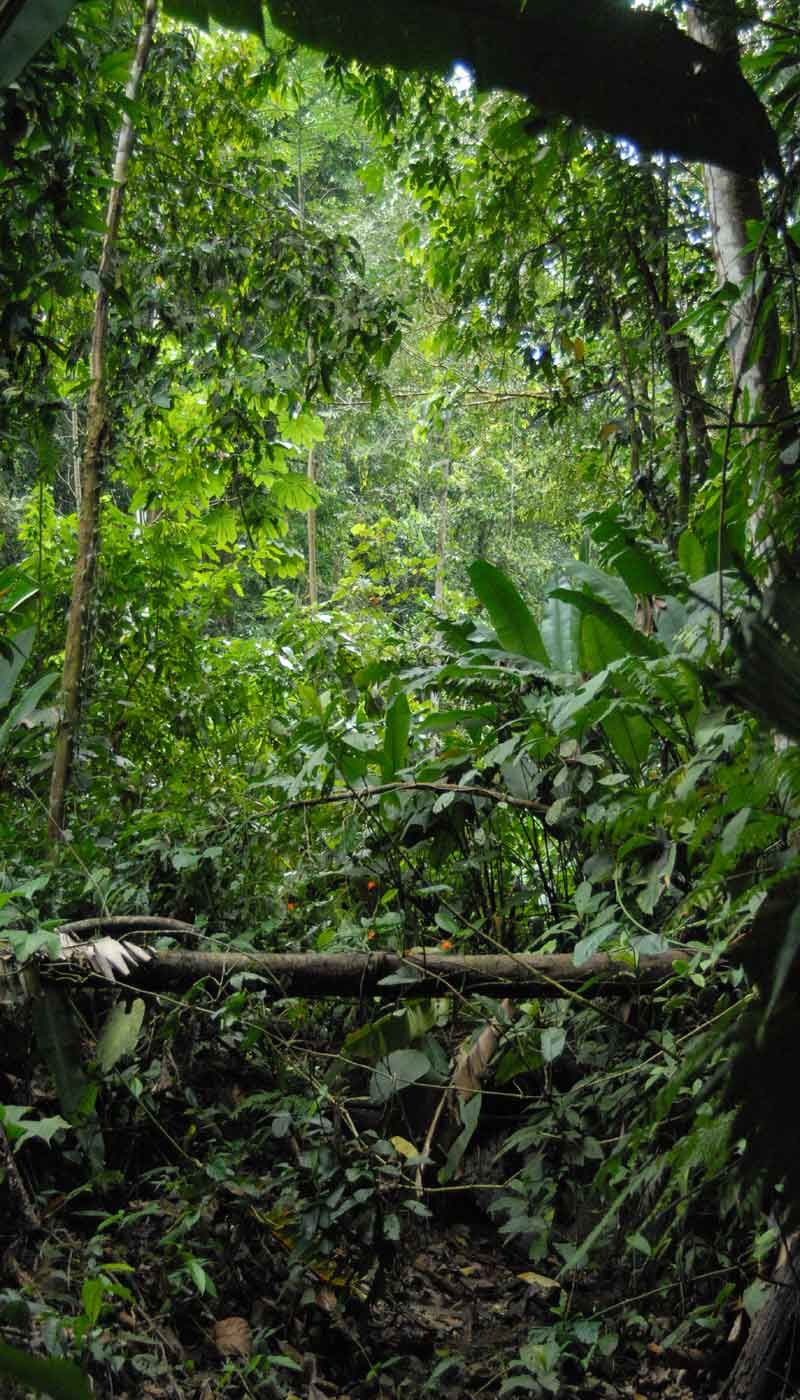 programmes for elementary schools in the area, a tree
nursery project
for replanting endangered trees, and a re-introduction
programme for
scarlet macaws. (Click here if you
want to read more
about the ecological importance of these forests).
programmes for elementary schools in the area, a tree
nursery project
for replanting endangered trees, and a re-introduction
programme for
scarlet macaws. (Click here if you
want to read more
about the ecological importance of these forests).
programmes for elementary schools in the area, a tree
nursery project
for replanting endangered trees, and a re-introduction
programme for
scarlet macaws. (Click here if you
want to read more
about the ecological importance of these forests). The
Universidad de
Golfito / ProSur Foundation
established the Rain Forest
conservation Fund and together with it, the Foundation
has set up a
long term target of
protecting 5,000 hectares of forest, in three different
Phases. The first Phase initiated in
1999, with the acquisition of three strategically
situated
properties in three different sectors of the Golfito
Rain Forest.
This way, we would purchase more forest around these
three sectors,
until eventually they will all touch and form a single
protected
area. The first adquisition was in the Northwest
side of the
forest in a sector known as Finca Alajuela. In the
Northeast side
of the forest, known as Km23 a property of 48 hectares
was
aquired. Later, 8 more adjacent hectares were
added. These
properties serve as our home base where laboratories and
offices are
located. Then, 98 hectares of primary forest were
secured in the
Km32 area, and later joined to an second acquisition in
that sector for
a total
of 180 hectares. All three sectors represent a
total of about 300
hectares (land set aside for conservation and research).
Currently the
Foundation has a list of
people willing to sell their properties to the
Foundation at a very
reasonable price. Your support
is crucial in protecting this endangered forest:
make
a contribution
to the Rain Forest Conservation Fund.
We are starting Phase 2 of the Land Adquisition Process. Once we have established our presence in these three different sectors of the forest, we started developing raport with the owners of neighboring properties, who in many cases do no live on premises. After making sure that our intentions are purely conservationist, and for research, they started offering their properties for sale to the Foundation. Because in many cases they simpathize with our efforts, the price for their land is very reasonable. Yet, they need to sell and loggers are offering them good money for their properties. We urgently require $220,000 dollars to acquire 176 hectares of primary forest before it is sold to loggers(*). Please, send us your contribution by cheque or by wire transfer.
The following is a list of properties adjacent to the three protected areas of Km23, Km32, and Finca Alajuela sectors.
THE UNIVERSITY OF GOLFITO FOUNDATION
UPS COST GUIDE FOR FUNDING LAND PURCHASES
FOUR-YEAR CAPITAL IMPROVEMENT PROGRAM 2007 THROUGH 2012
Land Conservation Initiative, Phase 2
Sector-Name Size in Hectares Funds Required
Km23 Sector
Finca
B.Bolaños
10,2 (*)
$
50,000
Finca D.Solorzano
92,4
Finca Aristides Calvo 23,8
Finca Sibaja-Picado 56,0
Km32 Sector
Finca C.Martinez 10.0
Finca E.Rodriguez 48,0
Finca Redes Golfito 1 98.0 (*) $120.000
Finca Redes Golfito 2 67.0 (*) $ 96.000
Finca Rio Sorpresa 401,6
Finca Los Helechos 422,3
Finca Gonzalez 655,5
Las Cataratas 544,7
Finca Alajuela Sector
Finca Dn.Julian 11.0
(*) Priority
Support Conservation Efforts NOW¡
Want to know HOW TO Support¡¡
Donate via NatureFund (Germany)
Ecological Importance of the Golfito Rain Forest:
These
forests around
Golfito have a tremendous ecological value.
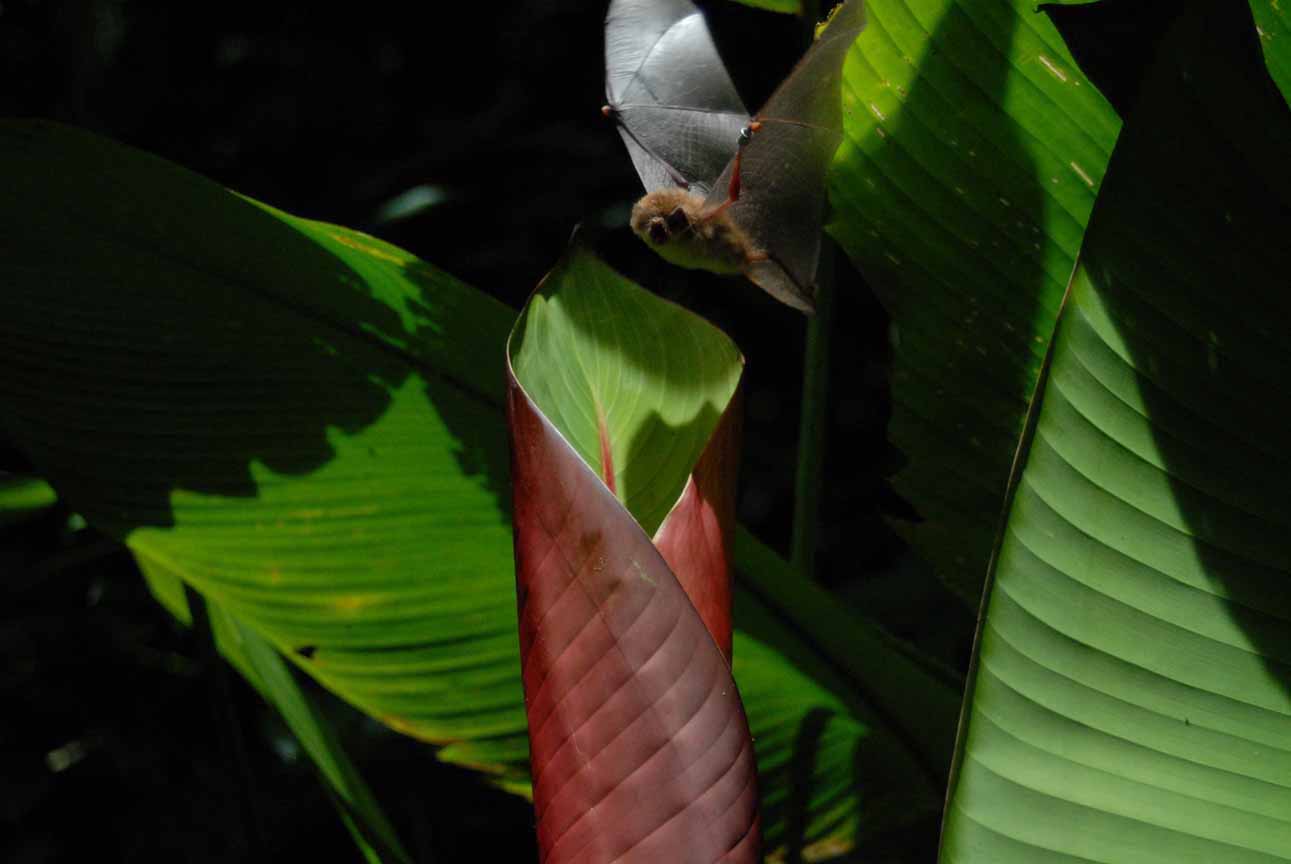
They are home to more than 140 known species of mammals,
300 species of
birds, 122 species of reptiles, and more than 100
species of
amphibians. In addition the Golfito forest have an
estimate of
over 4000 species of plants. This is roughly
about 75
percent of all the known species in Costa Rica (and
Costa Rica has
about 5 percent of all the species in the world); and
possibly a lot
more once more research is conducted in these
forests. The
Ministry of the Environment (from now on the Ministry)
classifies all
species of the Cyatheaceae,
Kicksoniaceae,
Lophosoriaceae and Metaxyaceae plant families as
"highly reduced" populations. Many species of
these families are
in found great numbers in these unprotected Golfito
forests. Furthermore, in
these forests you may find some unique and endemic trees that are close to extinction such as Copaifera camibar, Anthodiscus chocoensis, and Paramachaerium gruberi. The sap of the Camibar has a very important role in traditional medicine, yet it is almost impossible to find it nowadays. Some endangered trees such as the highly sought-after Peltogyne purpurea, Purple hearth, may only be left in these forests, and nowhere else in the world. There is no data, though, on the number of individuals left. It is our hope that by protecting this forest we might secure enough gene pool to ensure their long term survival.
Also, the Ministry lists many endangered fauna species that are fairly common in these forests. This is the case of the Habia atrimaxillaris, Saimiri oerstedii (squirrel monkey which is endemic of Southern Costa Rica and Western Panama), and Alowatta palliata (howler monkey). And, there are some populations of the endangered Tayassu pecari, Tapirus bairdii, Pantera onca (jaguar), Leopardus pardalis, Leopardus wiedii, and Herpailurus yaguaroundi. Farm owners have reported seen a pumas and jaguars. Yet, the most surprising finding was that of a Coloptychon rhombifer which was found in September of 2000 in Golfito. This is an extremely rare reptile last time observed 50 years ago and thought extinct. For a comparatively small forest, it is home to a surprising high biodiversity. Consequently, it is easy to understand why these forests around Golfito play a very important role in the conservation of endangered species.
Unfortunately, the Costa Rican government cannot protect these forests due to a lack of funding. As a matter of fact, the government has
not even been able to pay for large tracks of forests that are now part of the national park system, including about one third of the Parque Nacional Piedras Blancas, which is very close to the Golfito Wildlife Refuge. The Government considers that
these forests you may find some unique and endemic trees that are close to extinction such as Copaifera camibar, Anthodiscus chocoensis, and Paramachaerium gruberi. The sap of the Camibar has a very important role in traditional medicine, yet it is almost impossible to find it nowadays. Some endangered trees such as the highly sought-after Peltogyne purpurea, Purple hearth, may only be left in these forests, and nowhere else in the world. There is no data, though, on the number of individuals left. It is our hope that by protecting this forest we might secure enough gene pool to ensure their long term survival.
Also, the Ministry lists many endangered fauna species that are fairly common in these forests. This is the case of the Habia atrimaxillaris, Saimiri oerstedii (squirrel monkey which is endemic of Southern Costa Rica and Western Panama), and Alowatta palliata (howler monkey). And, there are some populations of the endangered Tayassu pecari, Tapirus bairdii, Pantera onca (jaguar), Leopardus pardalis, Leopardus wiedii, and Herpailurus yaguaroundi. Farm owners have reported seen a pumas and jaguars. Yet, the most surprising finding was that of a Coloptychon rhombifer which was found in September of 2000 in Golfito. This is an extremely rare reptile last time observed 50 years ago and thought extinct. For a comparatively small forest, it is home to a surprising high biodiversity. Consequently, it is easy to understand why these forests around Golfito play a very important role in the conservation of endangered species.
Unfortunately, the Costa Rican government cannot protect these forests due to a lack of funding. As a matter of fact, the government has
not even been able to pay for large tracks of forests that are now part of the national park system, including about one third of the Parque Nacional Piedras Blancas, which is very close to the Golfito Wildlife Refuge. The Government considers that
"Los
esfuerzos de
consolidación de áreas protegidas no se
han
completado; no se están incluyendo aún muestras de todos los
ecosistemas requeridos para lograr la representatividad
ecológica y existen aún conflictos de tenencia de la tierra."
(translation).
"The efforts to consolidate protected areas has not been finished;
and they do not yet include samplings from all the ecosystems
in order to make a sound ecological representation, and there
are still conflicts of land ownership."
completado; no se están incluyendo aún muestras de todos los
ecosistemas requeridos para lograr la representatividad
ecológica y existen aún conflictos de tenencia de la tierra."
(translation).
"The efforts to consolidate protected areas has not been finished;
and they do not yet include samplings from all the ecosystems
in order to make a sound ecological representation, and there
are still conflicts of land ownership."
It is, therefore, not expected that the Costa Rican government would take an active role in protecting the remaining 5,000 hectares of tropical rain forest in the Golfito region. The Ministry of the Environment, however, has developed the mission to "articulate the efforts of the different social and economic sectors to obtain the national objectives of conservation and sustainable use of the biodiversity, through the promotion of joint efforts and strategic alliances with local, regional, national and international entities." In other words, even though the Ministry does not have the resources to finance additions to the National Park system, it is highly interested in stimulating the development
of private reserves for public use. It is at this level that the ProSur Foundation plays an active role. The Foundation already protects 300 hectares of primary forest, and has a very ambitious plan to reach up to 5,000 hectares. Currently, we have a list of properties ready to be adquired and protected. See list above. Your support is crucial.
Copyright © 1999-2019 —
Fundacion
Universidad de Golfito (ProSur).
Derechos
Reservados, All rights
reserved.
Publicado por Oficina de Divulgacion, Fundacion UdG
(ProSur),
Golfito 60701, COSTA RICA
Last updated: 1 February, 2019